
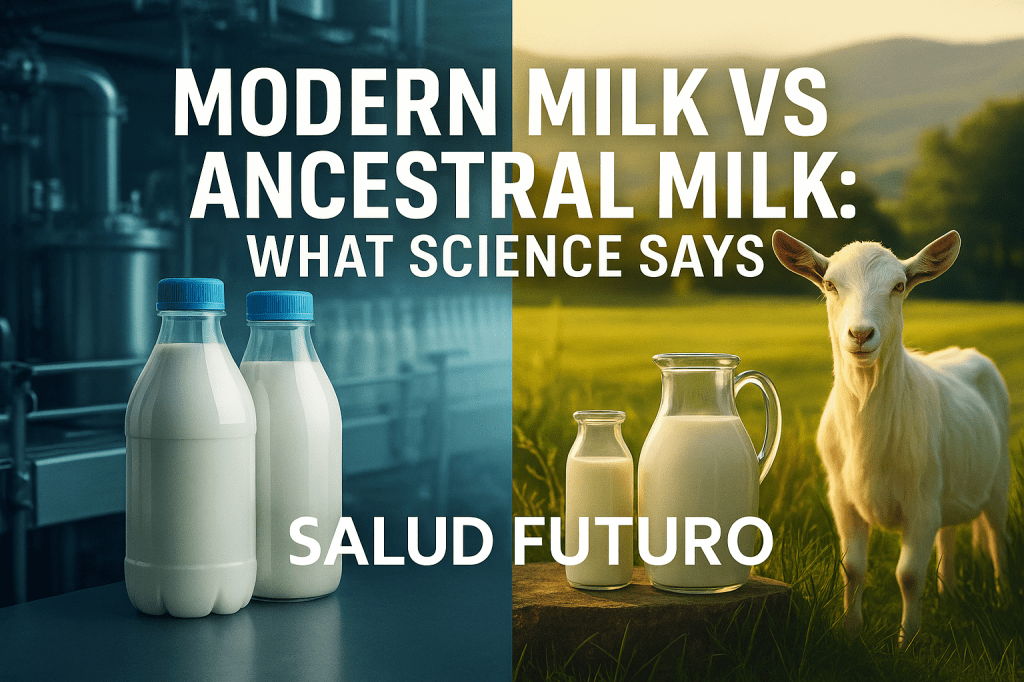
A new study has reignited the debate over the real health benefits of industrial modern milks compared to ancestral varieties like goat or buffalo milk.
🔬 1. WHAT’S THE DIFFERENCE?
Modern milks—such as highly processed cow’s milk—go through ultra-pasteurization and homogenization, which significantly alter their structure.
In contrast, ancestral milks like goat or buffalo are often less processed and more compatible with human digestion, especially in people with lactose intolerance or sensitivity to A1 casein.
🧬 2. BENEFITS OF ANCESTRAL MILKS
✅ Fewer allergens: Goat milk contains A2 casein, more similar to human breast milk.
✅ Easier to digest: Studies show reduced intestinal inflammation and mucus production.
✅ Nutrient retention: Being less processed, they preserve more natural enzymes and minerals.
📚 According to the Journal of Dairy Science (2025), patients who switched from cow’s milk to goat milk reported less bloating, better digestion, and reduced acne.
⚠️ 3. THE PROBLEM WITH MODERN MILK
While modern milk is fortified and widely available, it often:
- Contains traces of hormones or antibiotics if not organic.
- Triggers inflammation due to A1 casein, which some people cannot metabolize well.
- Loses natural digestive enzymes during high-heat processing.
💡 4. SCIENCE DOESN’T SAY “NO” TO MILK… BUT IT SAYS “RETHINK YOUR TYPE”
Every body is unique. The question is not whether to drink milk, but which kind.
👉 Ancestral milks, though less common, may be a better choice for people trying to avoid inflammation, improve skin health, or reduce digestive discomfort.
📚 Scientific source: Journal of Dairy Science, April 2025.